FSI installs the Azenco R-BREEZE for Puget Sound homeowners who want consistent shade and a clean architectural structure with no motor to maintain and no moving parts to program.
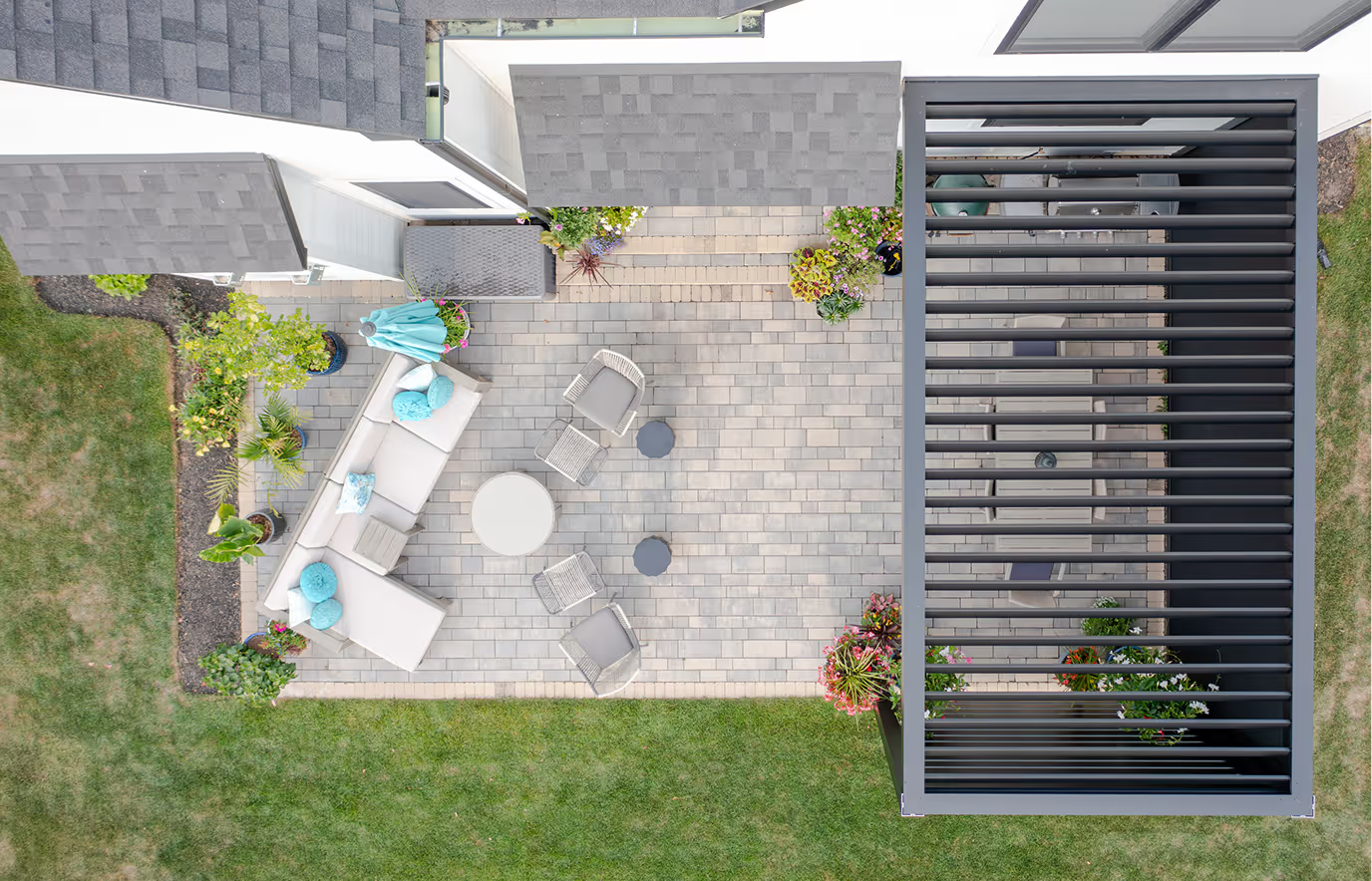
The R-BREEZE uses fixed aluminum louver slats at either 55 or 90 degrees. No motor. No sensors. No moving parts to calibrate or maintain. What it does have is a patented screwless roof assembly, concealed hardware, and the same 6060-T6 powder-coated aluminum as every other Azenco system.
If your space gets predictable afternoon sun and you want consistent shade without the complexity of a motorized system, R-BREEZE is the answer.

FEATURE 1
55 or 90 degree slat configurations. Choose the angle that manages your sun exposure and holds it there every day.
FEATURE 2
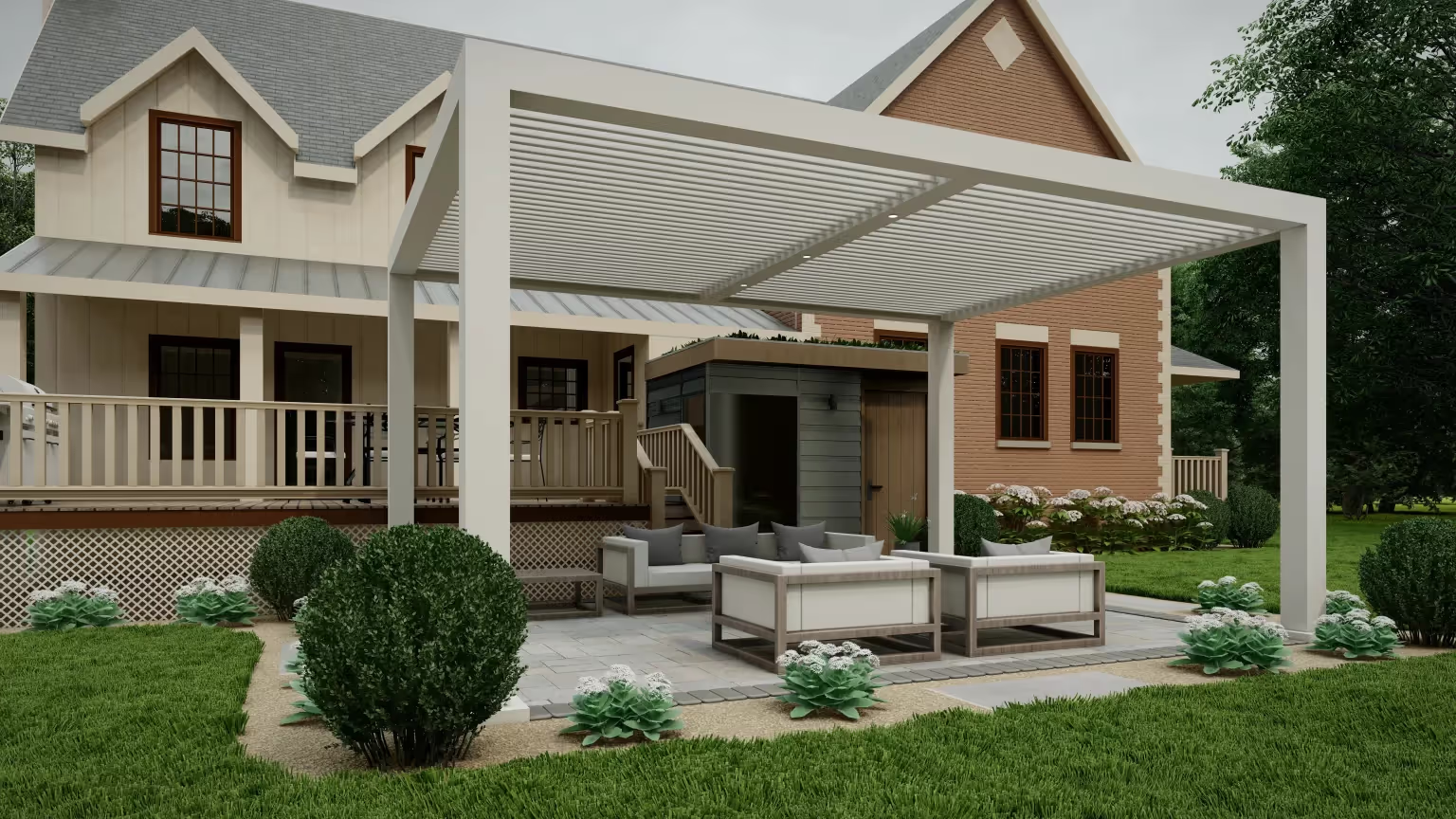
No exposed screws in the roof installation. Clean lines from every angle. Looks like it belongs on the home.

FEATURE 3
6060-T6 powder-coated aluminum. Concealed hardware. Built to the same structural standard as the full Azenco lineup.
The System
Build The Full Space

Enclose the sides of your R-BREEZE with the patented dual-pull magnetic screen system. Bugs out. Wind controlled. Solar, vinyl, or insect screen material.
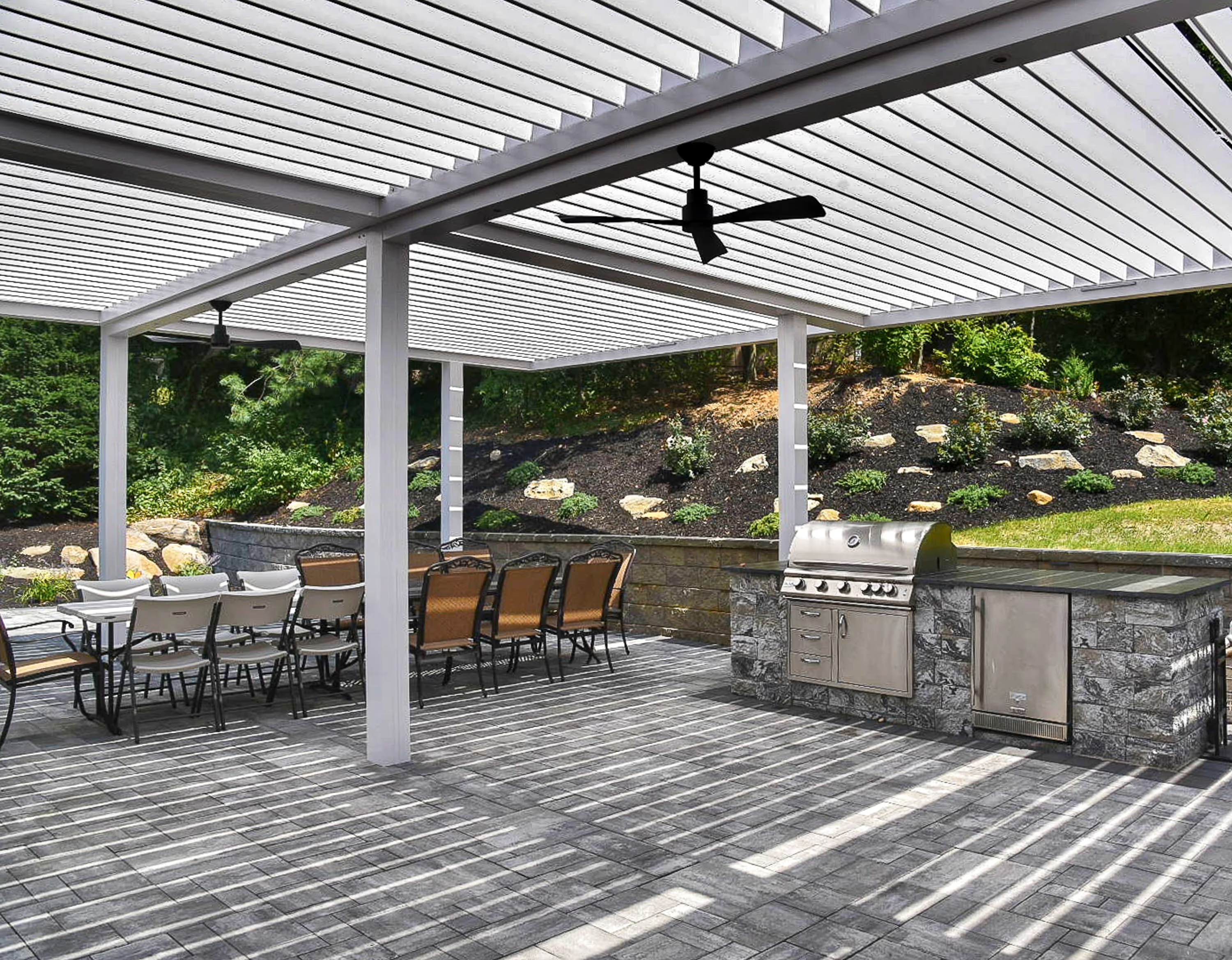
Aluminum-welded frame. Custom cabinetry. Commercial-grade appliances. Stone or tile facing matched to your home. Built to integrate with the pergola structure.
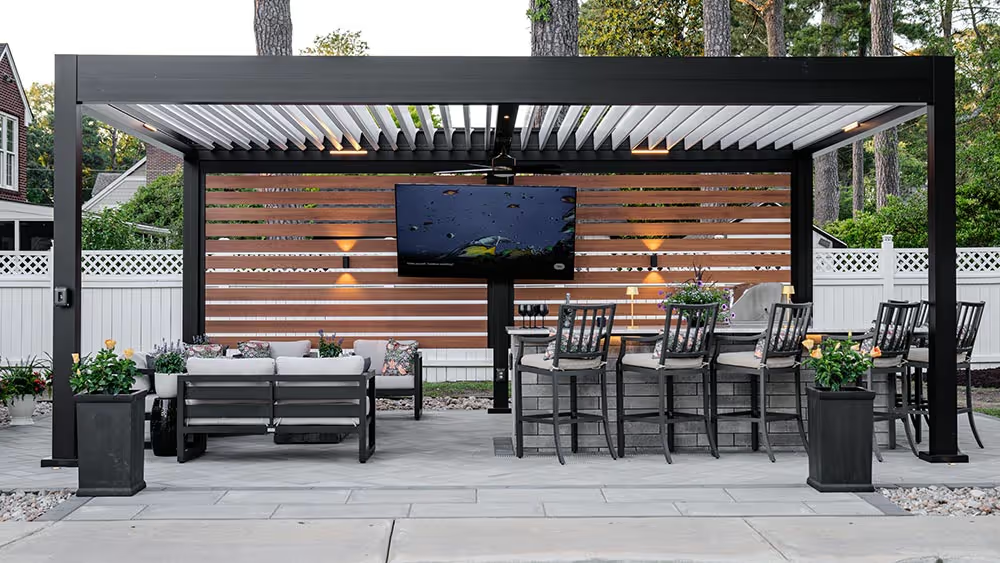
Outdoor-rated TV, patio speakers, and smart controls. Installed by the team that spent 20 years in low-voltage before building their first pergola.
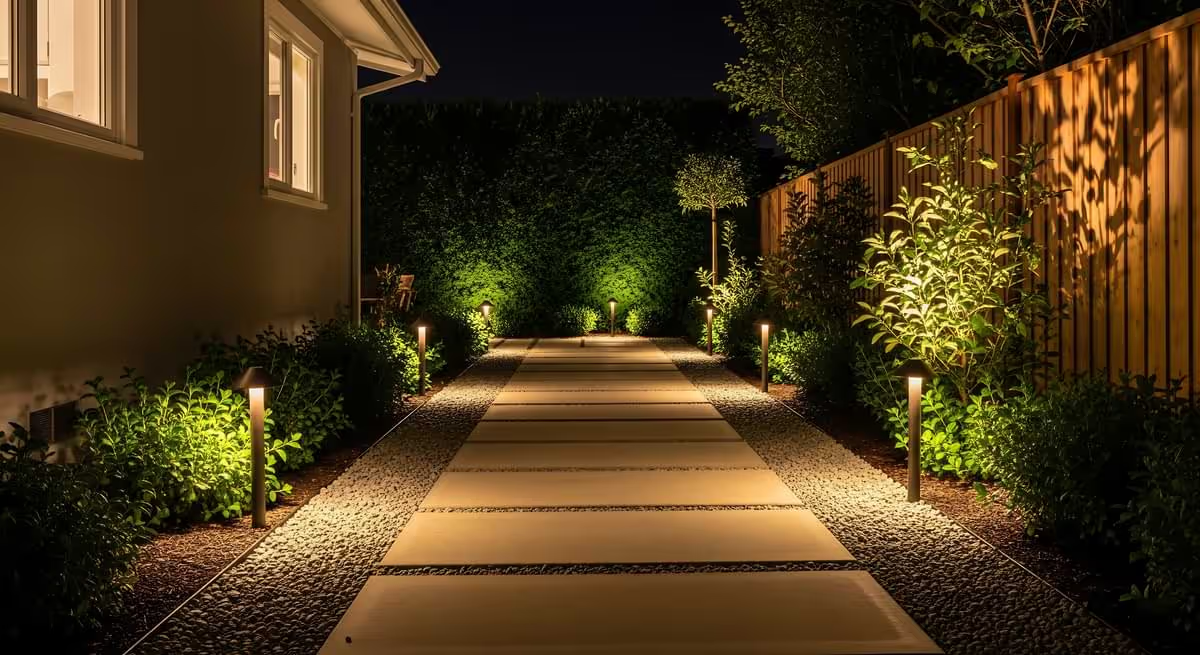
Recessed LED and LED strip lighting inside the R-BREEZE structure. Designed during the build. Your outdoor space stays usable after dark.
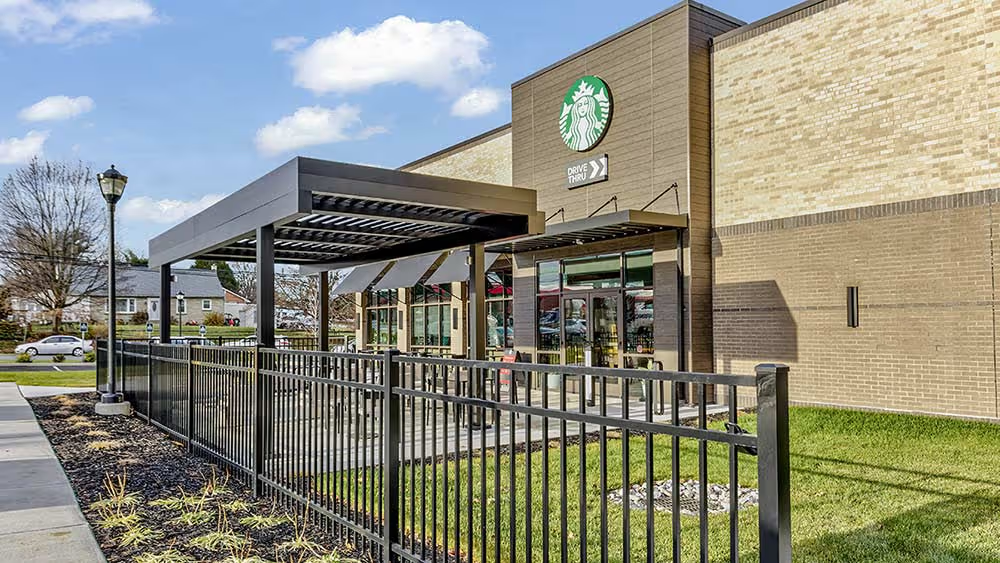
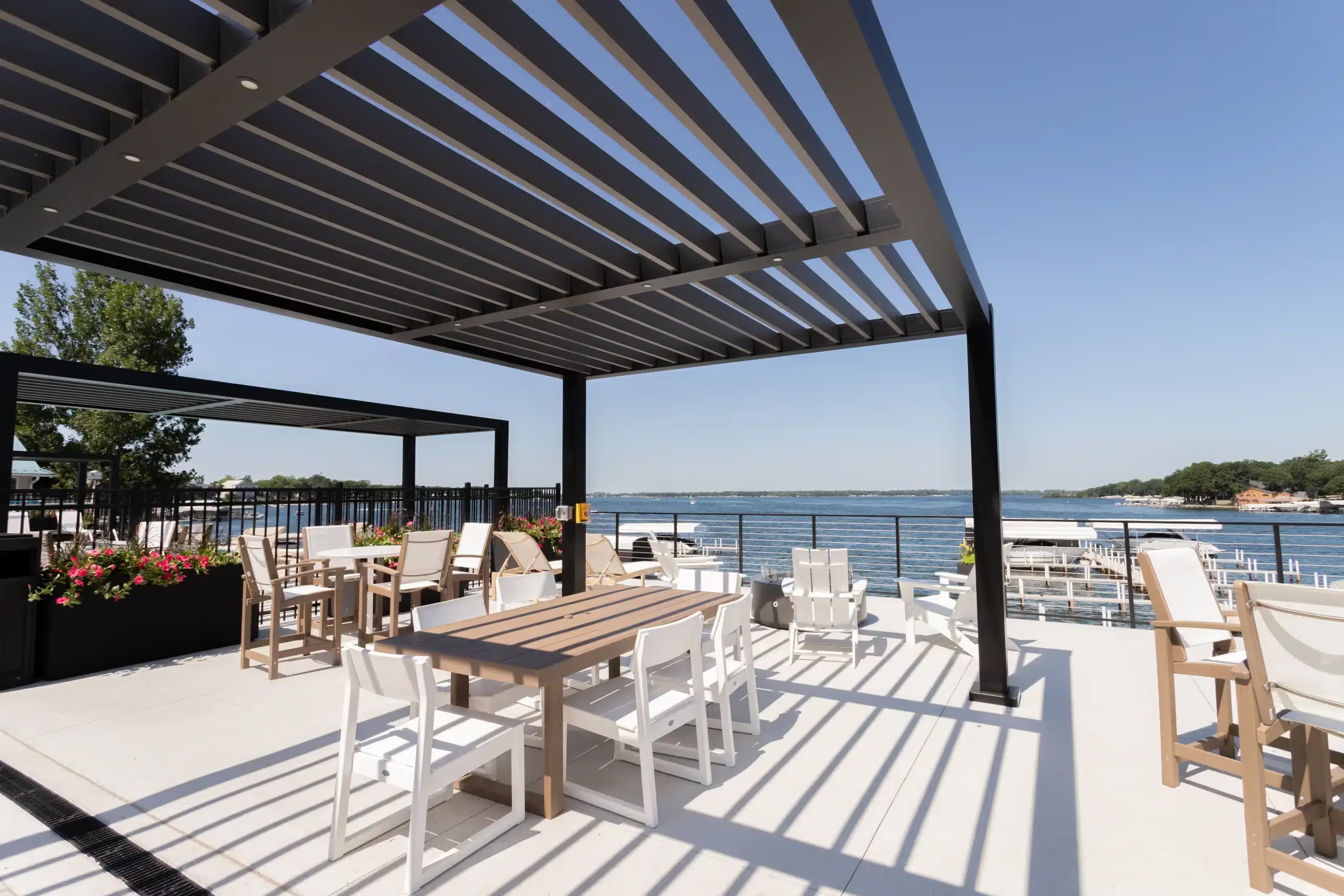
Restaurants, breweries, hotels, and venues across the Puget Sound use the R-BREEZE for consistent covered shade over outdoor seating. Fixed louvers at the right angle mean no staff intervention required. FSI installs and services commercial R-BREEZE systems with the same precision as residential.
common questions
The key functional difference is deployment style, footprint, and intended weather performance. A retractable awning mounts to a wall and extends horizontally over an area adjacent to the building — a fabric shade system that retracts when not in use. A pergola is a freestanding or wall-attached structure with its own aluminum frame, roof system, and structural posts that define a dedicated outdoor space — it is a permanent architectural element. An awning is typically a lower-cost, faster-installation solution for shading a door, window, or small patio area where a full pergola footprint is not appropriate. A pergola defines and covers a larger outdoor room with more structural permanence, weather performance options, and integration potential for screens, kitchens, and technology. FSI installs both — the consultation determines which is appropriate for the specific application and budget.
Yes — most pergola installations in Washington State require a building permit regardless of whether the system is motorized or fixed. The R-BREEZE is a permanent attached or freestanding structure that meets the size and attachment thresholds for permit requirements in most Puget Sound jurisdictions. FSI handles permit coordination for every project — managing the application, the structural documentation required for submission, the inspector scheduling, and the final sign-off. Permit timelines vary by jurisdiction. FSI confirms the applicable permit requirements for your specific location during the initial consultation and builds the permit timeline into the project schedule from the start.
The R-BREEZE is available in wall-mount and freestanding configurations. Wall-mount installations connect to the home's exterior wall using a ledger system and minimize the post count on the open side. Freestanding installations use four posts with no wall attachment. FSI assesses the site during the consultation to determine which configuration is appropriate based on proximity to the home's wall, the wall assembly's structural capacity, and the intended footprint. Both configurations are available in the standard Azenco powder-coat color options. FSI presents both configurations in the 3D design rendering so you see the finished appearance on your specific property before any materials are ordered.
Yes — MagnaTrack screens can be mounted to R-BREEZE structures to enclose the sides of the covered space. The screen enclosure converts the R-BREEZE's open-sided shade structure into a partially enclosed outdoor room that provides bug protection and moderate wind and rain protection on the sides. The limitation remains the overhead coverage — the R-BREEZE slats do not fully seal against sustained rain, so the combination of R-BREEZE plus MagnaTrack screens produces a three-season space in most Pacific Northwest locations rather than a full four-season outdoor room. Customers who want the highest weather performance combination should consider the R-BLADE with MagnaTrack screens, which produces a fully sealed overhead system with motorized side enclosure.
The R-BREEZE suits homeowners who want a clean architectural shade element with a defined louvered aesthetic, do not need motorized adjustability, are not relying on the structure for full rain protection, and prefer a simpler system with no mechanical components to maintain. It is also a good fit for installations where electrical access for a motor system is impractical or undesired, and for customers whose primary use case is summer afternoon shade rather than year-round weather management. Commercial applications where a consistent architectural shade element is more important than weather protection are also a fit for the R-BREEZE. FSI does not sell the motorized R-BLADE to customers whose needs are better served by the simpler R-BREEZE product.
R-BREEZE slats are available at 55 degrees or 90 degrees. The 55-degree angle provides partial shade with more airflow through the structure — more light reaches the space below and the visual effect is lighter and more open. The 90-degree angle provides more shade coverage with less light transmission and a slightly more solid overhead visual profile. Customers who want maximum airflow and a lighter feel tend to choose 55 degrees. Customers who want more shade definition tend to choose 90 degrees. FSI discusses the sun orientation of the specific installation site and the intended use of the space before a slat angle is specified in the proposal.
The R-BREEZE provides partial rain protection at the fixed slat angle but does not seal against precipitation the way the R-BLADE when closed or the R-SHADE do. At 55 degrees, the slats shed moderate rain reasonably well in a static rain event. In wind-driven rain or sustained Pacific Northwest rain events, water will reach the space below. The R-BREEZE is better suited for shade and airflow management than full rain protection. Homeowners who want to stay dry in October rain under their pergola will find the R-BLADE a better specification. Homeowners who primarily want a defined shade element for summer afternoon sun and are not relying on the structure for weather protection will find the R-BREEZE appropriate. FSI is direct about this distinction during the consultation.
The R-BLADE has motorized louvers that open and close electrically and can be set to any angle from fully open to fully closed, with automated rain and temperature sensors. The R-BREEZE has fixed louvers set permanently at 55 or 90 degrees with no adjustment capability. The R-BLADE is the right choice if you want year-round weather flexibility, maximum rain protection, and smart home integration. The R-BREEZE is the right choice if you want a clean architectural aesthetic, consistent shade at a fixed angle, and no mechanical system to maintain. For homeowners in the Pacific Northwest who want real weather protection through fall and winter, FSI recommends the R-BLADE over the R-BREEZE — the inability to close against rain is a meaningful limitation in this climate. FSI walks through the specific use case and site conditions with every customer before recommending a model.
The Azenco R-BREEZE is a fixed louvered pergola — an aluminum structure with stationary slats permanently set at either 55 or 90 degrees that create consistent shade and a defined overhead aesthetic with no moving parts. Unlike the R-BLADE's motorized louvers, the R-BREEZE slats do not open or close — they are set at the chosen angle during installation and remain there. The R-BREEZE's value is in its visual profile and simplicity. The fixed louvered slats create a sculptural overhead element that filters light at a consistent angle and establishes a defined architectural character for the outdoor space. There is no motor to maintain, no sensor system to calibrate, and no mechanical component that can fail. The tradeoff is that the weather protection is partial — the R-BREEZE sheds light rain at the slat angle but does not fully seal against precipitation the way the R-BLADE or R-SHADE do.
When one contractor manages the full outdoor scope, every design decision is made with full knowledge of every other element in the space. The kitchen is designed to wrap the pergola post — which is only possible if the same team knows both the kitchen dimensions and the post location before either is fabricated. The MagnaTrack screens are sized to the pergola opening dimensions — which only works if the same team specified both. The technology wiring is run inside the structural framing — which only happens if the technology is planned before the structure is completed. None of these integrations happen by accident. They happen because one team owns the design, the materials, and the installation of every element. The alternative — hiring separate vendors for the pergola, the kitchen, the screens, and the technology — produces a backyard where each element was done by someone who never spoke to the others. FSI eliminates that sequence entirely.